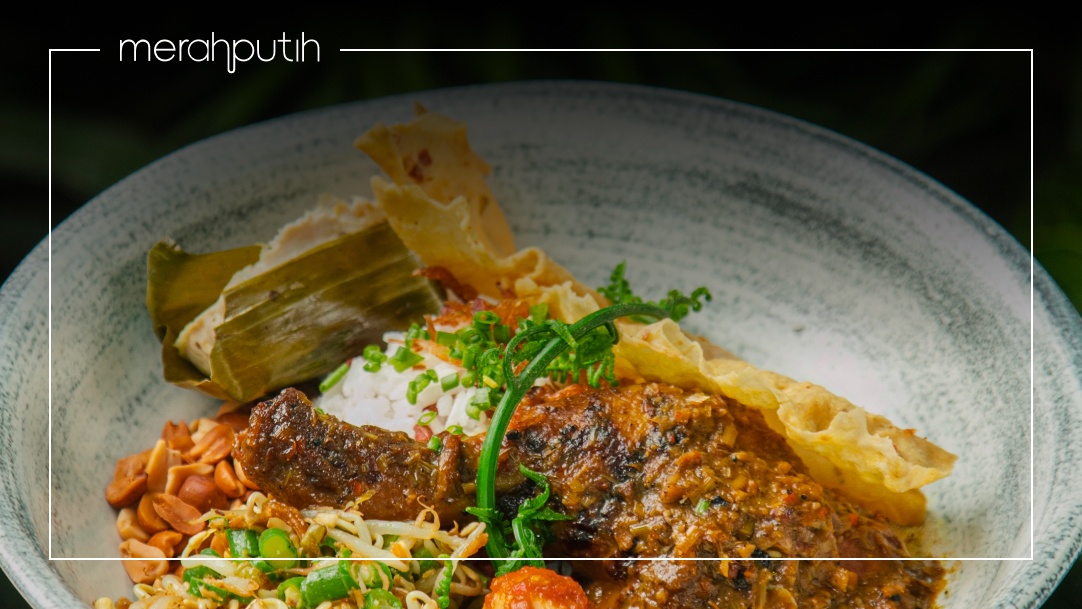

Did you know that a dish from Bali is on CNN’S list of the World’s Best Spicy Food? Ayam betutu is a traditional Balinese chicken dish that you shouldn’t miss. This beloved recipe has been around for centuries, passed down from generation to generation and highlighting the island’s rich and colourful culture. Let’s dive deeper into Bali’s iconic and defining dish.
Key Takeaways
- Ayam betutu traces back to the 16th-century Majapahit kingdom in Java, where it was originally a sweeter dish reserved for royalty, before the Balinese made it their own with bolder spices.
- The chicken is steamed for two hours, then grilled afterward, a twice-cooking method that keeps the meat tender while giving the banana leaf wrapping its signature char.
- Half the spice blend is rubbed onto the chicken, while the other half is stuffed inside along with belimbing sayur, a local fruit, and lime leaves.
- At Merah Putih, ayam betutu is served as part of a nasi campur with urap, quail egg, minced chicken, and peanut crackers.
What is ayam betutu?
Most commonly served with rice and other side dishes in a Balinese nasi campur, ayam betutu is a whole chicken dish cooked in the traditional spice blend called base genep. These spices include garlic, shallots, ginger, lemongrass, candlenut, galangal, turmeric, and chillies.
When cooked traditionally, this dish takes multiple hours to prepare but the effort is worth it. At the end of the day, it’s a burst of both flavours and aromas from the tenderest chicken.
History of ayam betutu
The origins of ayam betutu is said to trace back to the era of the Majapahit kingdom in Java. In the 16th century, this menu is said to have been the food of kings, nobles, and royalty.
On their travels to Bali, Majapahit royals influenced the Balinese with their cooking method of wrapping chicken in banana leaves and cooking it in coal underground. The Javanese influence also comes in the original flavour profile of the dish, which is said to be sweet. Over time, the Balinese brought their own bold spices and identity to the recipe, and it became the spicy chicken we know today.
How ayam betutu is made
The word “betutu” itself refers to a cooking technique of grilling meat wrapped in banana leaves. It comes from the Balinese word be meaning “meat” and tutu meaning “grill.” This cooking method is commonly used to cook poultry.
First a whole chicken is cleaned and drenched in lime juice and left to marinade. During this time, the base genep is prepared. Every spice is blended together until smooth and then tossed in a pan with oil, some brown sugar, and a stalk of lemongrass.
Half of this sautéed spice blend is used as a rub for the chicken, while the other half is stuffed into the chicken with a local fruit called belimbing sayur and some lime leaves.
The chicken is then wrapped in banana leaves and steamed for two hours. Once cool, it is grilled until the banana leaves turn golden brown.
What you get is a flavourful chicken – spicy, slightly sweet, and with a bright refreshing acidity. There is also a nice char that comes from grilling the chicken in leaves, and the twice-cooking method makes the meat juicy and tender.
Ayam betutu at Merah Putih restaurant
With its bright flavours, ayam betutu is the perfect lunch dish. If you’re in Bali and wondering what to get for lunch, try the delicious ayam betutu at Merah Putih restaurant. Available on the lunch menu, the chicken is served as part of nasi campur alongside the Balinese vegetable dish urap, quail egg, minced chicken, and peanut crackers.
Be sure to book a table today with these special gift vouchers.

An Indonesian Dining Experience Like No Other
FAQ
The spices used in ayam betutu are iconic to Bali and serve as a throughline in Balinese cuisine. These flavours make ayam betutu a staple Balinese dish.
Ayam betutu is rubbed down in the Balinese spice blend base genep, which includes spices such as garlic, shallots, ginger, lemongrass, candlenut, galangal, turmeric, and chillies.
The word “betutu” itself refers to a cooking technique of grilling meat wrapped in banana leaves. It comes from the Balinese word be meaning “meat” and tutu meaning “grill.” This cooking method is commonly used to cook poultry.
Both ayam betutu and ayam taliwang are flavourful grilled chicken dishes, but the spices for each are different. Ayam taliwang spices consists of tomatoes, chillies, and curcuma, while ayam betutu is cooked in base genep.