
A business meeting over lunch and a product launch in front of 150 people are not the same brief, even though both get filed under “corporate event.” A meeting needs quiet and a table. A launch needs a room people can move through, a bar that keeps up, and a backdrop worth photographing. Seminyak has plenty of venues that do the first well. Fewer are actually built for the second.
If the event on your calendar is a launch, a year-end party, or anything meant to be experienced standing up rather than seated around a table, the venue criteria change completely, and it’s worth knowing what to look for before the booking goes to a hotel ballroom by default.
A seated business meeting or corporate dinner is a different brief entirely.
Why a product launch or corporate party is a different brief
It’s a performance, not a conversation
A business dinner is built around discussion. A launch is built around a moment: a reveal, a toast, a room reacting at the same time. The venue needs to support that: sightlines toward a focal point, enough open floor for people to gather, and acoustics that don’t swallow a microphone.
Guest count changes everything
Where a corporate dinner might run 10 to 40 people seated, a launch or party guest list often runs into the hundreds. That’s a different room entirely, and a different catering format: canapés and stations rather than a plated menu timed to courses.
The room needs to photograph well
Press photos, social content, and the event deck your marketing team builds afterward all depend on the room looking like something. A generic function room with drop ceilings and patterned carpet works for a meeting; it undersells a launch.
Timing is less flexible
A launch date is usually locked to a product release, a fiscal quarter, or an external announcement, so it moves for almost nothing. That makes venue reliability, especially around weather, a bigger risk factor than it would be for a meeting that could, worst case, be rescheduled.
What to look for in a standing-format venue
Capacity for a crowd
Look for a venue that states its standing capacity clearly, not just its seated one. The two numbers are rarely close, and a room quoted for 130 seated might only comfortably hold half that standing with space to actually move.
Layout that supports circulation
A single open floor works better than a room broken into smaller sections, since guests need to be able to move toward a stage or focal point without bottlenecking at doorways.
A kitchen that can do canapés at scale
Plated fine dining and large-scale canapé service are genuinely different kitchen disciplines. A restaurant that’s excellent at seated service isn’t automatically set up to run continuous canapé stations for 200 people. It’s worth asking directly rather than assuming.
Weatherproofing
For an event that can’t move its date, an outdoor or semi-outdoor venue is a real risk in Bali, particularly during the wet season from October to March. A fully indoor venue removes that variable entirely.
Types of events this format suits
- Product launches: the reveal moment itself, usually with press or media in attendance and a strong visual focal point. Guest lists often mix media, partners, and customers who’ve never met, so the room needs to work for strangers as easily as for internal teams.
- Year-end parties: a company-wide celebration, less formal than a launch but still built around guests circulating rather than sitting. These tend to book out earliest of the five, since most companies land on a date within the same few weeks each December.
- Company anniversaries & rebrand celebrations: milestone moments where the room and the moment matter as much as the guest list. A rebrand in particular benefits from a space with its own visual identity, since a new look needs to stand out against the backdrop rather than disappear into it.
- Media previews & press events: smaller than a full launch, but with the same emphasis on photography and a room that reads well on camera. Guest counts are often under 50, which makes these easier to schedule outside peak weekends.
- Client appreciation events: a lower-key thank-you for existing accounts rather than a pitch to new ones. Usually smaller and more relaxed than a launch, with more room built into the evening for actual conversation.

An Indonesian Dining Experience Like No Other
Restaurant or hotel ballroom for a standing event?
A hotel ballroom is the default for a reason. It comes with built-in AV, a dedicated events team, and rooms upstairs for out-of-town guests. For a large conference with breakout sessions and overnight delegates, that convenience is hard to beat.
For a launch or a party, the trade-off looks different. A ballroom is designed to be neutral, which is exactly what makes it forgettable on camera and in memory. A restaurant brings its own architecture, lighting, and atmosphere, so the room does part of the storytelling before anyone has spoken. It also brings a working kitchen, which usually means better food than a banquet line can offer.
The practical questions still matter. Ask any restaurant venue directly about AV, stage space, and load-in access, since these are the areas where a purpose-built ballroom tends to have the edge. If the answers are workable, a restaurant often gives a launch far more character for the same guest count.
A product launch or corporate party at Merah Putih
Space & setup
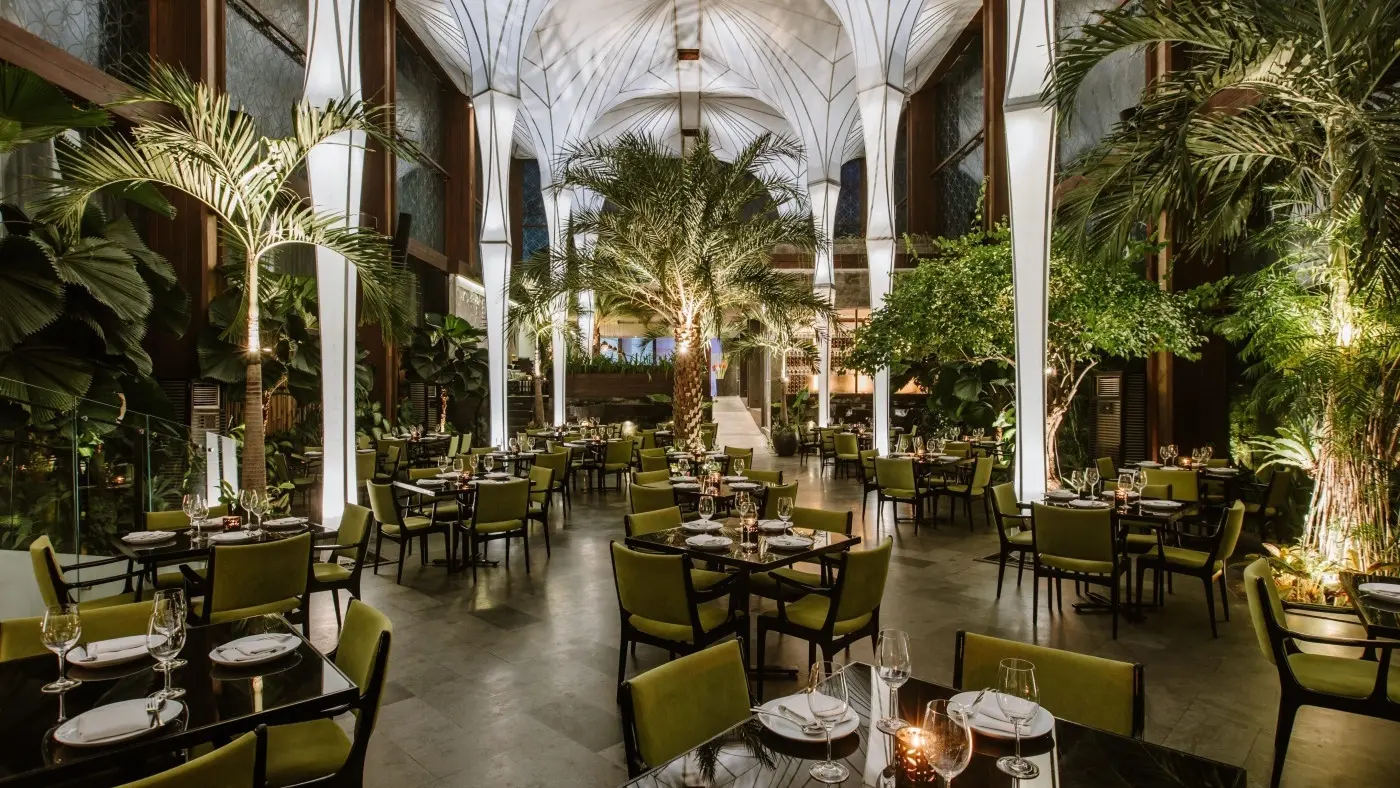
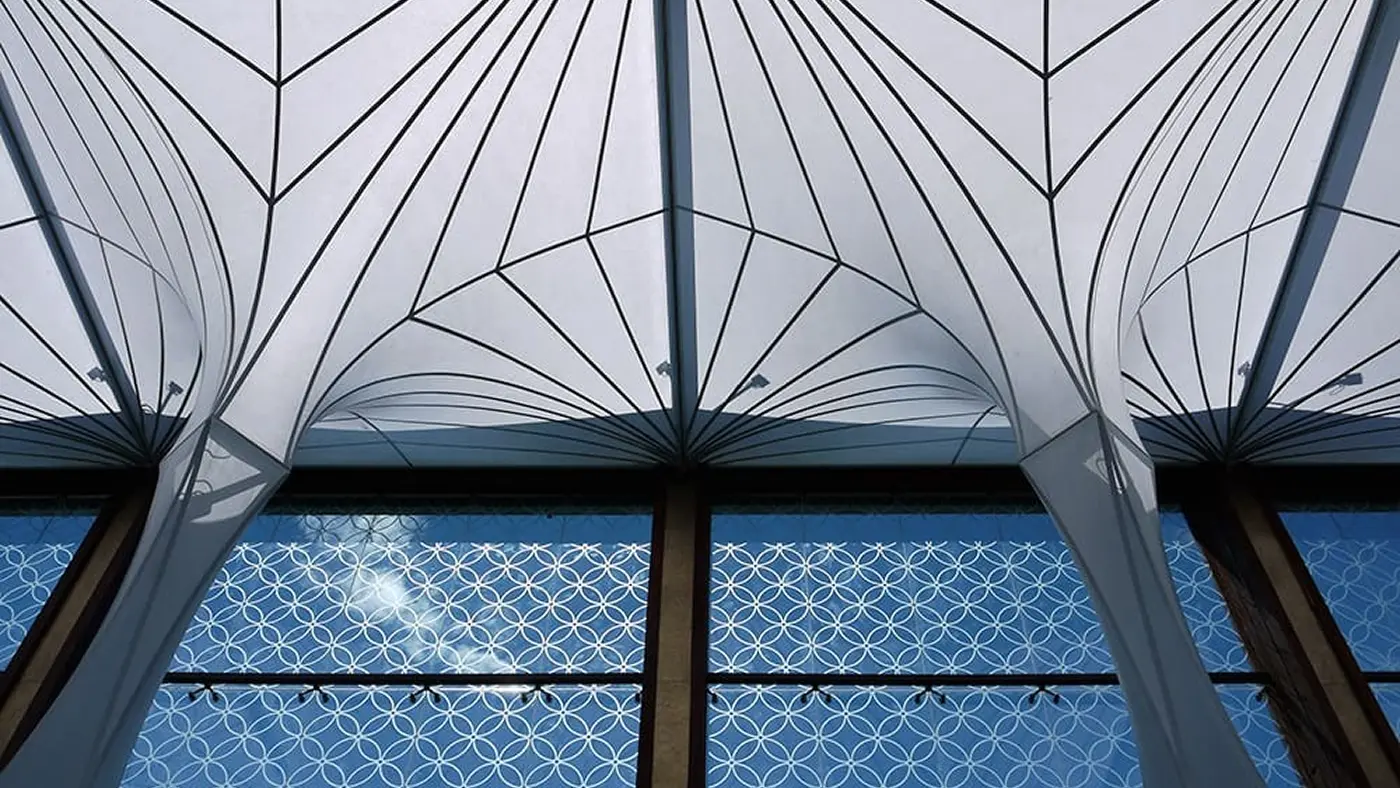
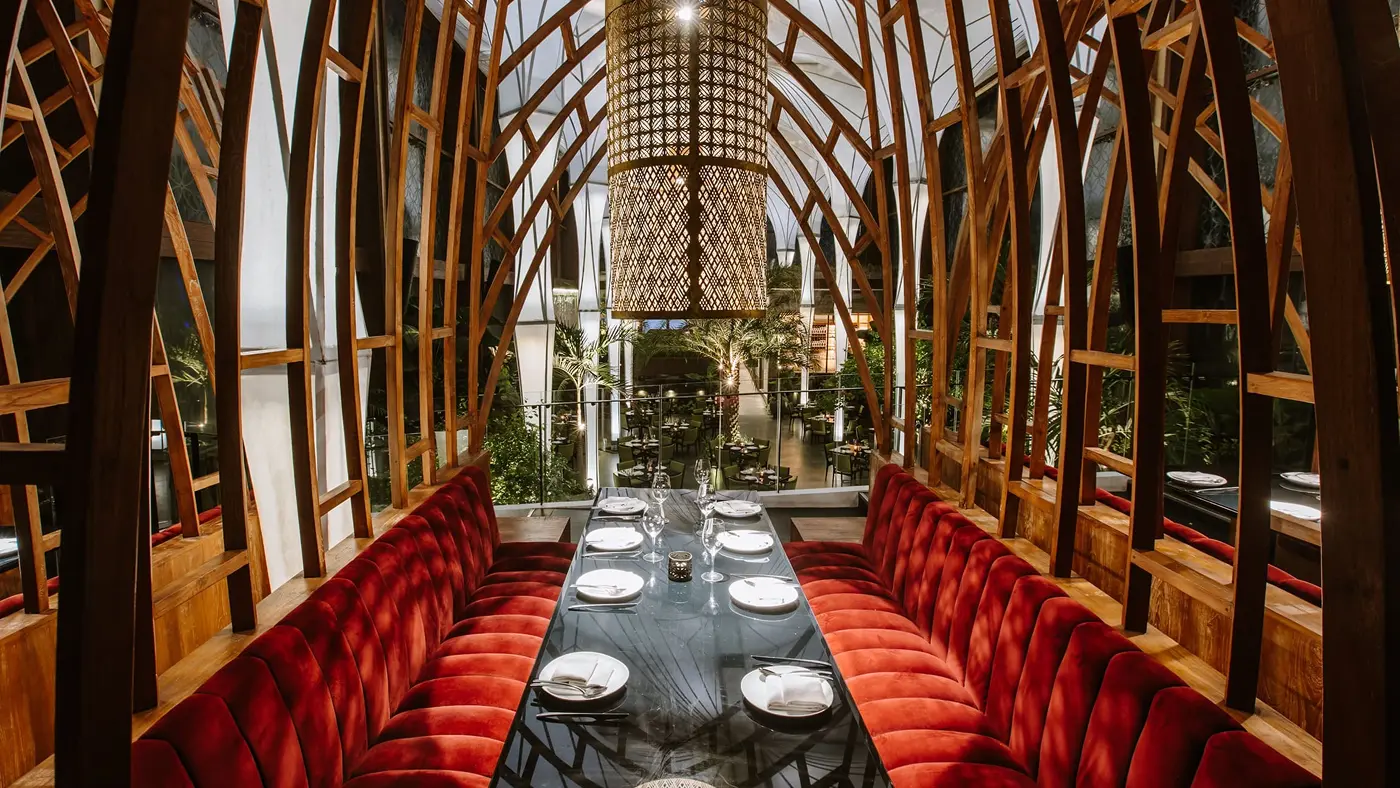
Merah Putih’s full private hire configures as a standing canapé party for 200+ pax, with high ceilings, a translucent roof, and an open floor plan built around a central indoor garden, a setting distinct from a standard hotel function room. For smaller launches or press previews, the space can also be scaled down without losing that visual character. The same open layout also suits wedding receptions and milestone birthday celebrations, and every option is listed on the Merah Putih groups page.
Menu & catering style
The kitchen builds canapé menus around Indonesian classics and creative dishes drawing on spices and flavours from across the archipelago, designed for continuous service rather than timed courses. Guests circulate, the food keeps coming, and nobody’s tied to a seat.
Hours & scheduling note
Merah Putih’s regular hours run 12.00–15.00 for lunch and 17.30 onward for dinner. An evening launch or party fits comfortably within dinner service hours; anything earlier needs to be discussed directly with the team.
Planning timeline for a launch or party
- Lock the date and format early. Standing events of this size need more lead time than a small dinner booking, especially if the date is tied to an external announcement that can’t move.
- Confirm capacity against your actual guest list, standing rather than seated, including any stage, step-and-repeat, or display area that eats into floor space. A guest list of 150 rarely leaves room to spare once staging is factored in.
- Brief the kitchen on catering style: canapé stations, a specific menu theme, or dietary requirements across a large guest list. The earlier this happens, the more the kitchen can plan continuous service rather than adjusting mid-event.
- Sort logistics: AV for any presentation or reveal moment, branding or signage placement, and press or media access if relevant. These tend to need a direct conversation with the venue rather than a standard booking form.
- Confirm the run of show closer to the date. Timing for the reveal moment, speeches, or any scheduled activity, so the venue’s team knows what to expect and when.
Give the Gift of Merah Putih
Treat someone special to an Indonesian dining experience like no other.
FAQ
Up to 200+ pax for a standing canapé party.
Several weeks to a few months out is safer than a smaller dinner booking, given the scale of catering and setup involved.