Bali may not seem much like paradise when you see the viral videos of traffic on the island. From news about the standstill on the toll road causing people to leave their cars and walk to the airport, to influencers sharing the nightmarish congestion on the Canggu shortcut, it’s now a known fact that you can’t avoid traffic in Bali. However, this shouldn’t be a deterrent to you enjoying your vacation. Understanding the causes of traffic and how to best navigate it will allow you to still make the most of your time in the island of the gods.
Key Takeaways
- Bali’s traffic comes from more tourists, construction on narrow roads, and a growing number of ride-hailing vehicles.
- The worst spots are the Seminyak to Canggu corridor, the Ngurah Rai Bypass, Sunset Road, and the road up to Uluwatu.
- Rush hour runs 7:30 to 9:30 in the morning and starts again at 16:30.
- To beat it, plan routes ahead, get to your destination area early, and stay in two or three areas instead of commuting from one base.
- For a hands-off alternative, a private driver or a short helicopter transfer can help you skip the worst corridors entirely.
Reasons behind traffic in Bali
A number of factors contribute to the heavy traffic on the island.
Influx of tourists
The lack of tourism during the pandemic took a huge toll on Bali’s economy. To recover, the government has opened up the island to more tourists.
Foreign arrivals reached roughly 3.9 million in the first seven months of 2026 alone, and total visitors, including domestic travellers, came close to 10 million. Bali’s economy grew 5.78% year on year in Q2 2026, the highest growth rate of any Indonesian province.
However, this doesn’t come without its consequences. The rise in number of tourists means that infrastructure also has to keep up.
Development in major areas
In order to accommodate visitors, Bali is greenlighting the development of real estate like never before. Construction sites are popping up at almost every turn in Bali’s popular areas, slowly moving along the coast from Kuta to Legian to Seminyak to Canggu. While accommodation and entertainment are much needed, these new buildings are eating into Bali’s roads, which are already narrow to begin with. This exacerbates traffic in Bali.
Increase in number of online taxi cars and motorbikes
In addition to infrastructure, transportation also needed to rise to the occasion. Online ride-hailing services such as Grab and Gojek have certainly opened the door to more job opportunities for locals, with thousands of online taxi drivers carrying passengers daily in cars and on bikes. However, the increase of transportation on the roads have contributed to worse congestion.
High season tourism
As an island heavily reliant on tourism, Bali’s traffic varies depending on the season. It tends to be more packed during public holidays, long weekends, and school breaks.
The biggest peaks follow a fairly predictable calendar. Christmas and New Year bring a surge of international arrivals, with the airport approach, Canggu, and Kuta among the most congested spots. The mid-year school holidays (roughly July and August) bring family travellers from overseas and from elsewhere in Indonesia, and the Eid holidays send domestic visitors to the island in large numbers.
Balinese ceremonies matter too. In the days before Nyepi, the Day of Silence, Melasti processions and Ogoh-ogoh parades bring road closures and slow traffic, and on Nyepi itself the roads and the airport shut for 24 hours. Checking the holiday and ceremony dates before you book is a simple way to see these spikes coming.
Understanding Bali traffic patterns
While it’s impossible to avoid traffic completely, knowing when and where traffic is likely to start is a step in navigating the island like a pro.
‘The ‘Red Zones’: Navigating Bali’s most congested arteries
Certain areas in Bali have become synonymous with standstill traffic. The Seminyak-Canggu corridor, particularly around Jalan Raya Kerobokan and the infamous Canggu Shortcut, remains the most challenging “Red Zone.” These narrow roads were never designed for the current volume of SUVs and transport vans.
Additionally, the Ngurah Rai Bypass and Sunset Road frequently come to a halt during peak hours, acting as the main arteries connecting the south to the rest of the island.
In the south, the steep, winding roads leading up to Uluwatu are also seeing increased congestion as the region’s popularity explodes. Fixes are coming for the road to Uluwatu: an overpass at the Jimbaran intersection, still in the planning stage, and the first phase of the South Ring Road through Pecatu, due by the end of 2027. Until then, expect traffic on the way to Uluwatu to stay heavy at peak times.
Rush hour
- Morning (7:30 to 9:30 AM): when kids are dropped off at school, people head into work, or some head to the gym and various wellness centres.
- Evening (from 16:30): when students let out of school and employees are done for the day, and people start making their way to various beaches to catch the sunset or surf.
- Wind-down (between 17:00 and 19:00): traffic should die down once everyone has reached their destination, whether that’s home, the beach, or a restaurant for dinner.
Areas to avoid
During rush hour, these spots are worth routing around:
- Entertainment centres like Canggu, Seminyak, and Legian
- Sunset Road and the Bypass
- Major tourist spots like Tanah Lot, Uluwatu Temple, and Garuda Wisnu Kencana cultural park
- Culinary hotspots like Jimbaran seafood
What is being done about traffic in Bali?
In an attempt to minimize traffic, the government has carried out several initiatives.
Easing the Canggu corridor
The Seminyak to Canggu corridor, one of Bali’s most congested stretches, hasn’t been ignored, though the fixes are still a while off. The first is a rail line that has already been through a reset. The planned Light Rail Transit (LRT) broke ground in September 2024, then stalled after failing to attract the private investment it needed.
In its place, Bali has moved to a battery-powered electric tram. In September 2026, the provincial government and Badung regency signed a cooperation agreement with state railway company KAI for a line of about 12 km between Ngurah Rai Airport and Canggu. A technical study is still to be carried out, groundbreaking is planned for March 2027, and the first stretch is targeted to open around 2028.
The second is a proposed water taxi route linking Ngurah Rai Airport to Berawa by sea, which would bypass the Canggu Shortcut entirely. It has reached the technical design stage, but no construction date has been announced.
Easing the Jimbaran-Uluwatu corridor
The Jimbaran to Uluwatu corridor, the route onto the Bukit Peninsula, is seeing more immediate action, though the biggest fix has changed shape. Authorities first planned an underpass at the Jimbaran (Udayana) intersection, but concerns over flooding, a river channel near the junction, and higher costs led them to switch to an overpass.
The central government has agreed to fund the construction in full, and Badung has finished acquiring the land. Officials say work should start in 2026, but the design and planning documents are still being finalised, so it’s too early to count on relief from it.
The South Ring Road is further along. Its first phase, roughly 11 km running through Jimbaran, Pecatu, and Melasti, broke ground in July 2026, with completion targeted for the end of 2027 and later sections to follow through 2029.
Separately, Badung’s transportation agency tested rerouted traffic at several Pecatu and Uluwatu junctions in June 2026, restricting certain turns and vehicle types in the late afternoon and evening. The scheme was made permanent in early July after officials reported smoother traffic.
Development of new tourist areas
The Badung region is currently the epicentre of major tourism activities in Bali, with Uluwatu and Ubud gaining traction as of late. Most of the island’s traffic is found in these regions. With the development of new tourism areas towards Tabanan, Mengwi, and north Bali, including a planned second international airport in Buleleng (still in the planning and pre-construction phase), traffic in Badung is hoped to reduce.
How to beat traffic in Bali
These four habits make the biggest difference.
Plan ahead
Spontaneity is fun to an extent, but in Bali, it may land you in the middle of rush hour traffic. Use Google Maps or Waze to estimate travel time, get ahead of traffic, or plan out different routes.
Be in your desired area early
Let’s say you want to catch the sunset in Uluwatu tonight, but you’re staying in Seminyak. Beat the sunset chasers at their own game by being in the Uluwatu area by 16:30. You can hang out at a café or chill at a beach club while enjoying golden hour. This way, you’re guaranteed to not miss the sunset, which usually starts around 18:30.
Take the longer route
Sometimes, traffic in Bali can be avoided by taking an alternative route. This is especially helpful when roads deemed as “shortcuts” are also getting congested beyond measure. If your navigation app sends you on a longer route, think of it as a chance to see different sights.
Accommodation hop
If you’re spending an extended amount of time in Bali, moving between areas might be the best option. Choose two or three areas to spend two to three days in so that you can properly explore each location before moving on to the next. This also ensures you don’t tire yourself out traveling long distances and enduring traffic.
Premium transportation solutions
For travellers who’d rather not navigate Bali’s roads themselves, a range of efficient travel options exist beyond the standard taxi or ride-hailing app.
- Private driver or chauffeur service: widely available through hotels, villas, and specialist operators. A private driver knows the local routes and suits full-day or half-day hire better than single trips.
- Helicopter charter within Bali: a small number of licensed operators offer transfers such as Ngurah Rai Airport to Ubud or Uluwatu, from roughly US$1,200.
- Helicopter charter between islands: routes to places like Nusa Penida or the Gili Islands run from around US$1,800.
Helicopters aren’t for every budget, but they skip the road entirely
Enjoying Bali despite the traffic
While Bali is rich with culture and natural beauty, exploring the island may prove inconvenient with recent developments in tourism. However, traffic in Bali shouldn’t be the reason your holiday is ruined.
By understanding the traffic patterns and following the tips in this guide, your island adventure is still very much within reach! If you’re still on the fence, read Is Bali Worth It? to see why the island may surprise you.
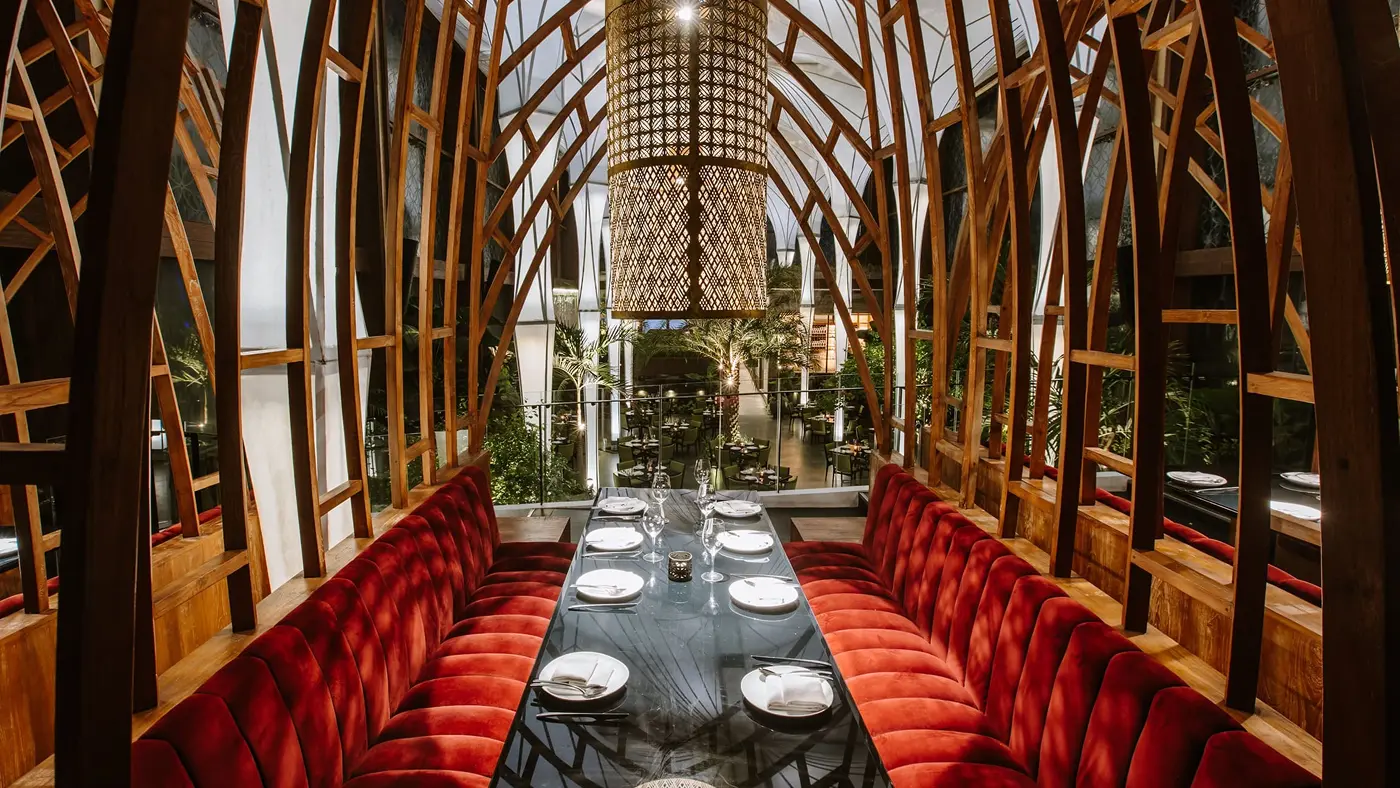
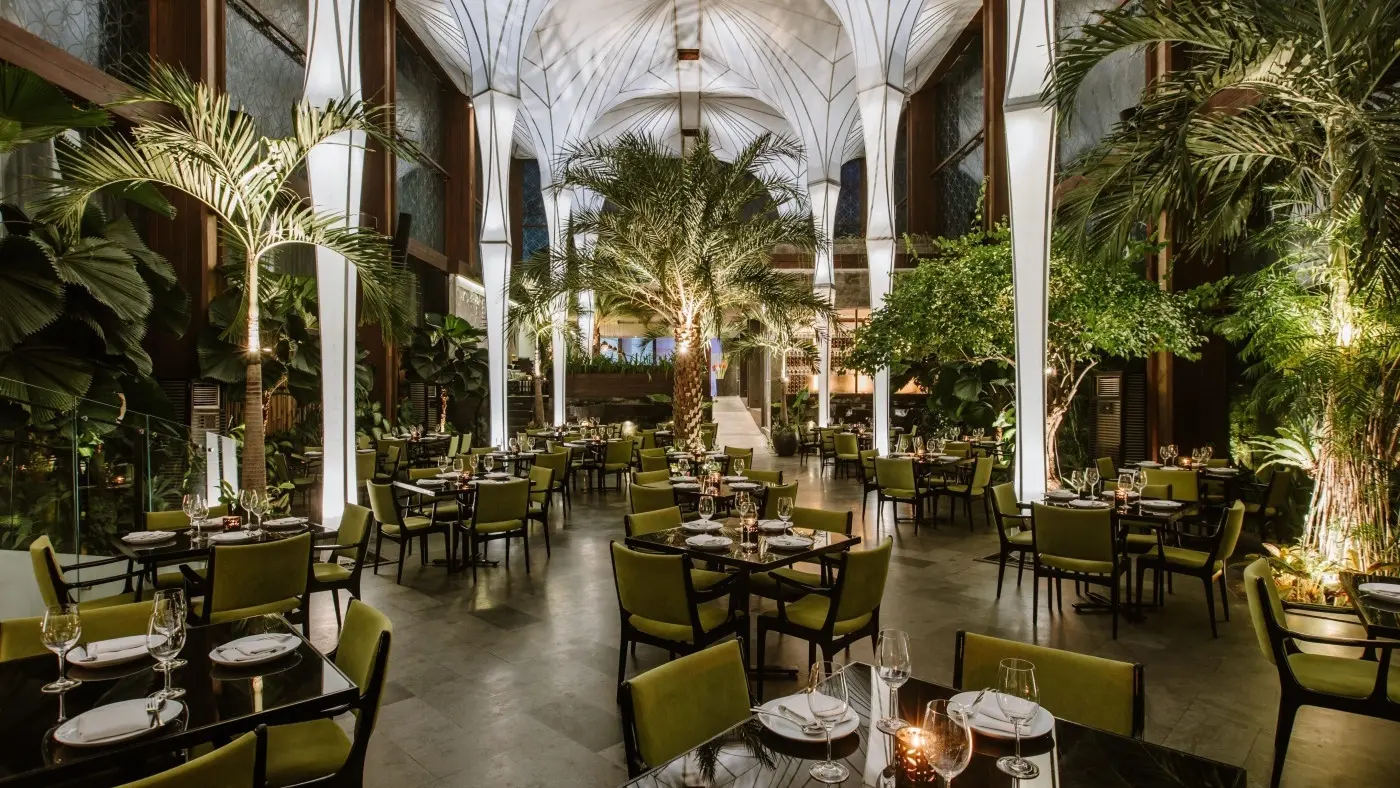
Ready to put the planning aside? Book your table at Merah Putih Bali and let us take care of the rest.

An Indonesian Dining Experience Like No Other
FAQ
A number of factors contribute to the heavy traffic on the island. Tourist arrivals have continued climbing, reaching close to 3.9 million foreign visitors in the first seven months of 2026 alone. That growth, alongside real estate development eating into Bali’s already narrow roads and a rising number of online taxis and motorbikes, all adds up to heavier congestion.
The morning rush hour in Bali is between 7:30 to 9:30 in the morning when everyone starts their day. This is when kids are dropped off at schools, people come into work, or some people go to the gym and various wellness centres. The evening rush hour starts at 16:30. In Bali, this is not only when students let out of school and employees are done for the day. It’s also when people start making their way out to various beaches to catch the sunset or surf.
These four habits make the biggest difference.
– Plan ahead
– Be in your desired area early
– Take the longer route
– Accommodation hop
The Badung region is currently the epicentre of major tourism activities in Bali, with Uluwatu and Ubud gaining traction as of late. Most of the island’s traffic is found in these regions. A planned overpass at the Jimbaran intersection and the new South Ring Road, which broke ground in July 2026, are aimed at easing some of that pressure in the longer term.