
Rice is an integral part of Indonesian cuisine and culture, serving as a primary staple food for over 90% of the population. In fact, surveys by the National Statistics Board have found that the low-income population in Indonesia’s urban centres spend 22% of their monthly income on rice.
Not only is rice central to sustenance and survival, it is also a part of the culture. The running trope among locals is that Indonesians “have not eaten” or “are not full” if they haven’t had a meal containing rice in a day. This highlights how important rice is to Indonesian daily life.
It’s no wonder then that nasi campur, literally translating to “mixed rice,” is a popular dish across the Indonesian archipelago. Different regions will offer different takes on it, so let’s dive right in and discover the versatility of this dish.
What is nasi campur?
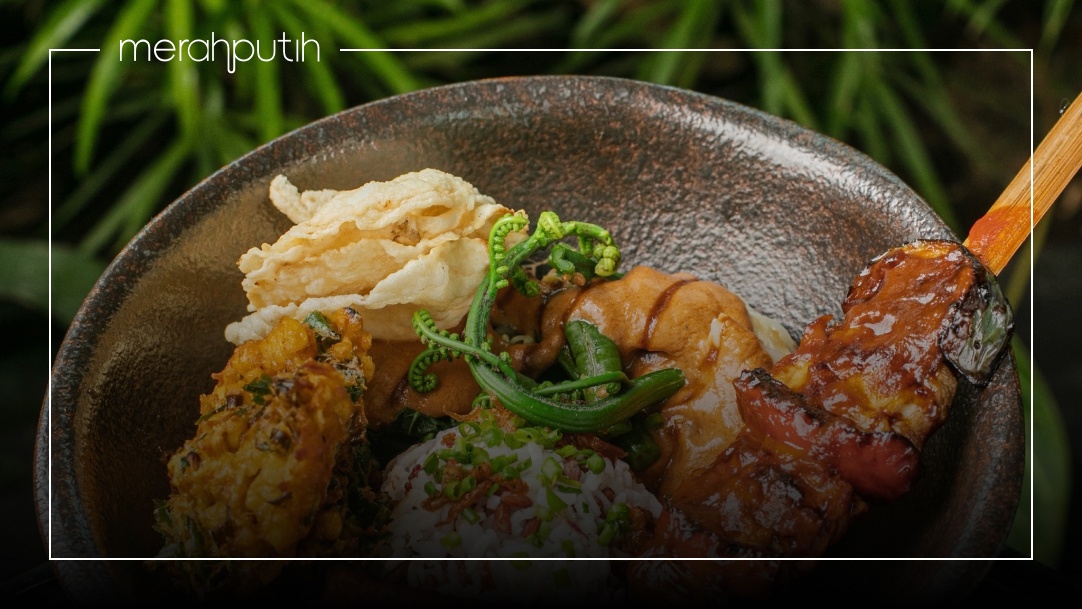
Nasi campur is a traditional Indonesian menu typically consisting of white or brown rice, accompanied by a variety of side dishes arranged in small portions around the plate. Typical side dishes include meat, vegetables, eggs, and soybean proteins like tofu and tempeh.
Often, nasi campur is enjoyed with a generous helping of sambal and some crackers. Many locals will choose to eat with their hands, contributing to the overall experience.
The origins of the dish itself are obscure, unable to be traced to one particular inception or recipe. There are also no strict rules that define it. It has most probably evolved from the traditional eating style among Indonesians, which tends to be more communal. Instead of having each side dish in the middle of the table, nasi campur puts them all together in one plate.
Variations of nasi campur across regions
You will find varying versions of nasi campur depending on which provinces you visit. This is because different regions will include side dishes, and often styles of rice, that are local to them.
In Java
The Javanese word for rice is sego. In this particular province, nasi campur is referred to as sego campur or nasi rames. This variation is said to have been introduced to Indonesians by a Eurasian chef who ran a public kitchen in Surabaya, East Java during the time of Japanese colonisation.
In Java, nasi rames is commonly served with fried chicken or fish, a fried egg, potato and sambal stir-fry, and a small portion of fried noodles. This is not a fixed list of side dishes, but rather a combination of items that are often substituted and replaced, depending on the specific region in Java and the vendor selling the dish.
In Madura
Off the northeastern coast of Java lies the island of Madura. Here, nasi campur is known as nasi serpang. This menu incorporates items local to the island, so you’re likely to find clams sauteed in sambal amidst other side dishes.
Rice is typically served with cod fish steamed in banana leaves, vermicelli stir fry, duck egg, crackers in a sweet and spicy rujak sauce, and Madurese beef jerky. Other than these, you can also find nasi serpang dishes that contain fried chicken, grilled fish, satay, or shredded coconuts. Of course, it wouldn’t be complete without a fragrant shrimp paste sambal to accompany all the different items on the plate.
Balinese nasi campur
Known locally as nasi Bali, the Balinese version of nasi campur incorporates the island’s local delicacies as well as their iconic spice blend, base genep. This spice blends together turmeric, ginger, galangal, shallots, candlenuts, garlic, chilli, lemongrass, lime leaves, and coriander seeds. This dish contains a scoop of rice along with the following.
Lawar
This is a Balinese vegetable dish made of long beans, beansprouts, shredded coconut, shredded jackfruit, and sometimes minced meat. The vegetables are mixed with turmeric, shallots, garlic, and candlenuts to add a brightness to the nasi campur.
Babi guling
This Balinese iteration of suckling pig is stuffed with base genep and roasted over an open flame until the skin is crispy and the meat tender. The pork is then pulled apart before serving it as a side dish for nasi campur.
Ayam betutu
Chicken serves as an alternative protein to pork. To make this dish, a whole chicken is steamed or roasted in base genep and then shredded.
Sambal matah
Nasi Bali is known for its heat level that is in part thanks to sambal matah. This type of sambal is local to Bali, made by dousing chopped shallots, red chilli, green chilli, lemongrass, lime leaves, and shrimp paste in hot coconut oil.
Where most Indonesian sambals are made by grinding up the ingredients, sambal matah is left as is, with the addition of lime juice and some salt. This sambal brings a fresh lightness to the nasi campur, but also an equal amount of spiciness.
Sate lilit
Imperative in a plate of nasi Bali is sate lilit, which translates to sate that is . This traditional Balinese sate can be made of ground beef, chicken, or fish. The meat is combined with spices and then wrapped around sticks of lemongrass before grilling.
Why nasi campur is a must-try when you’re in Bali
If you find yourself in Bali and are curious to try local dishes, ordering nasi campur is a great way to appreciate Bali’s culinary delights in one sitting. You’ll experience the flavours of the base genep spices iconic to Bali, along with the tenderness of meat and the crunch of fresh local vegetables.

Give the Gift of Merah Putih
Treat someone special to an Indonesian dining experience like no other.
The Evolution of Nasi Campur: From Street Food to Fine Dining
While nasi campur is deeply rooted as an everyday, humble dish enjoyed at warungs across the archipelago, its versatility and cultural richness have also carried it into the realm of fine dining. Increasingly, restaurants across Indonesia, particularly in culinary hubs like Bali, are reimagining the dish: elevating its presentation, sourcing, and overall dining experience.
Premium ingredients, familiar flavours
Modern interpretations often lean on premium, locally sourced ingredients that showcase the archipelago’s agricultural range, think organic vegetables, higher-grade cuts of meat, and carefully made spice pastes, transforming familiar flavours into a more refined culinary experience without losing what makes the dish recognisable.
A different kind of presentation
Rather than the usual scoop-and-side-dishes plate, elevated versions of nasi campur are often arranged more deliberately, with each component given its own space and moment on the plate. It’s the same dish at its core, just presented with more intention.
A refined introduction to Indonesian heritage
For travellers keen to explore Indonesian cuisine more deeply, this evolution offers a way to experience a familiar dish through a new lens, in settings suited to social gatherings or business dinners alike. It also introduces nasi campur to a wider audience, showing the range of what Indonesian cooking can be.
Dietary Considerations and Vegetarian Nasi Campur Options
Beyond regional variations, nasi campur also offers flexibility for diverse dietary needs.
As nasi campur gains international popularity, questions about dietary accommodations, particularly for vegetarian and vegan diners, are becoming more common. While traditional nasi campur often features a variety of proteins like chicken, pork, or beef, the dish’s format, a scoop of rice surrounded by several individual side dishes, makes it naturally adaptable to plant-based diets, since diners can simply choose which components go on their plate.
Vegetarian and vegan options
Many vendors, especially in tourist-friendly areas of Bali, now offer nasi campur with dedicated vegetarian or vegan side dishes. These typically swap meat components for plant-based proteins such as tempeh and tofu, alongside a wider array of vegetable-focused items like stir-fried greens, corn fritters (bakwan jagung), and egg-based dishes for those who eat eggs. Worth noting: some vegetable-forward sides seen in Balinese nasi campur, lawar in particular, traditionally include minced meat or, in some recipes, pork blood, so it’s best to ask for the vegetable-only version rather than assume it’s automatically meat-free.
A naturally varied plate
Beyond dietary restrictions, nasi campur’s format also lends itself to a varied, well-rounded meal: a portion of rice for carbohydrates, a protein or plant-based substitute, and a mix of vegetables and sambal, all on one plate. Portion sizes of each side dish tend to be small, which naturally encourages variety rather than any single ingredient dominating the meal.
Ordering with confidence
When ordering, it’s best to clearly state your dietary preference to the vendor or waitstaff. Look for signage indicating vegetarian or vegan options, or ask if they can prepare a plate without meat products. If cross-contamination is a concern, higher-end restaurants and dedicated vegetarian eateries tend to have more controlled kitchen environments than street stalls.
Savoring Nasi Campur: Tips for the Best Experience
Once you’ve found your perfect spot, here’s how to fully immerse yourself in the nasi campur experience.
Eat with your hands
While cutlery is always available, many locals eat nasi campur by hand, mixing the rice and side dishes together for a more direct sense of the dish’s textures and temperatures. Make sure your hands are clean beforehand; this hands-on, communal approach is a cherished part of Indonesian dining culture.
Mind the sambal
Nasi campur is almost always served with a sambal on the side, and the exact kind varies by region and vendor, from the raw, herbaceous sambal matah to the deeper, more cooked sambal terasi. These aren’t just condiments; they’re integral to the dish’s flavour, adding heat, tang, and umami in different measures. Start with a small amount and add more to taste, and don’t hesitate to ask your server for a milder option if you’re sensitive to spice.
Prioritise freshness and turnover
A good nasi campur stall or restaurant will have a wide array of freshly prepared side dishes; look for vibrant colours and distinct aromas rather than food that’s been sitting out. If you’re concerned about food safety, especially as a first-time visitor, opt for establishments with high turnover and visible hygiene practices. Higher-end restaurants in Bali, including Merah Putih, offer a more controlled, hygienically prepared version of nasi campur for a worry-free meal.
Where to find nasi campur in Bali
Bali is certainly not lacking in nasi campur vendors, but if you’re looking for an elevated experience, visit Merah Putih Restaurant. Nestled in the heart of bustling Petitenget, Merah Putih is a luxury Indonesian restaurant serving local cuisine with a Balinese flare.
The lunch menu features nasi campur with a variety of protein options, from ayam betutu, slow roasted pork belly, slow cooked beef cheek, to chargrilled fish.
Book a table today and make use of special gift vouchers to experience Bali in a plate.
An Indonesian Dining Experience Like No Other
FAQ
Known locally as nasi Bali, the Balinese version of nasi campur incorporates the island’s local delicacies as well as their iconic spice blend, base genep. This spice blends together turmeric, ginger, galangal, shallots, candlenuts, garlic, chilli, lemongrass, lime leaves, and coriander seeds. This dish contains a scoop of rice along with the following:
– Lawar
– Babi guling
– Ayam betutu
– Sambal matah
– Sate lilit
The origins of nasi campur itself are obscure, unable to be traced to one particular inception or recipe. There are also no strict rules that define it. It has most probably evolved from the traditional eating style among Indonesians, which tends to be more communal. Instead of having each side dish in the middle of the table, nasi campur puts them all together in one plate.
Nasi Bali is a local Balinese mixed rice containing a variety of traditional protein and vegetable dishes cooked in a blend of local spices.
You will find varying versions of nasi campur depending on which provinces you visit. This is because different regions will include side dishes, and often styles of rice, that are local to them. Aside from Bali, nasi campur is a popular dish in various regions of Java and in the island of Madura.