
Balinese architecture represents far more than aesthetic design. It embodies a complex philosophical system that harmonizes spiritual beliefs, social hierarchy, and environmental principles.
For centuries, this architectural tradition has shaped the island’s landscape, creating spaces that balance functionality with sacred purpose.
Understanding Balinese architecture requires looking beyond the brick and mortar to appreciate the Hindu-Buddhist beliefs, Tri Hita Karana philosophy, and indigenous traditions that inform every design.
The Tri Hita Karana philosophy
Tri Hita Karana lies at the heart of Balinese architecture. This is the principle that mandates harmony between man and God, man and nature, and man and each other.
Every traditional Balinese compound, from humble family homes to elaborate temple complexes, follows this philosophy. The layout reflects cosmic order and spiritual hierarchy.
In Bali, structures and villages are positioned according to compass points. Kaja means north and points towards sacred mountains, particularly Mount Agung. North, or upwards, represents the heavens where the gods reside. On its opposite end, kelod or south points towards the sea, associated with demons and the underworld.
This orientation determines the placement of family temples, living pavilions, and service areas within a compound, creating a physical manifestation of spiritual geography.
Sacred space
Balinese architecture divides any space into three hierarchical zones: utama (sacred/highest), madya (middle/transitional), and nista (profane/lowest). This division appears at every scale, from individual buildings to compounds and village layouts.
This sacred geography ensures that daily life unfolds within an orderly environment that reflects Hindu cosmology.
Distinctive architectural elements
Traditional Balinese buildings feature several characteristic elements that distinguish them from other Indonesian architectural styles.
Every structure has a bale or open-sided pavilion. This is a raised platform with a roof supported by columns, allowing natural ventilation while providing shelter.
Different bale types serve specific functions within a compound:
- Bale daja: for ceremonies and sleeping
- Bale dangin: for family activities
- Bale dauh: for receiving guests
- Paon: kitchen
Each structure stands independently, connected by garden pathways that integrate architecture with landscape.
Another iconic feature of Balinese architecture is curved thatched roofs, traditionally made from palm fibres. In temples, multi-tiered roofs create distinctive silhouettes. They not only serve an aesthetic purpose, but also shed monsoon rains efficiently.
Ornamental carvings
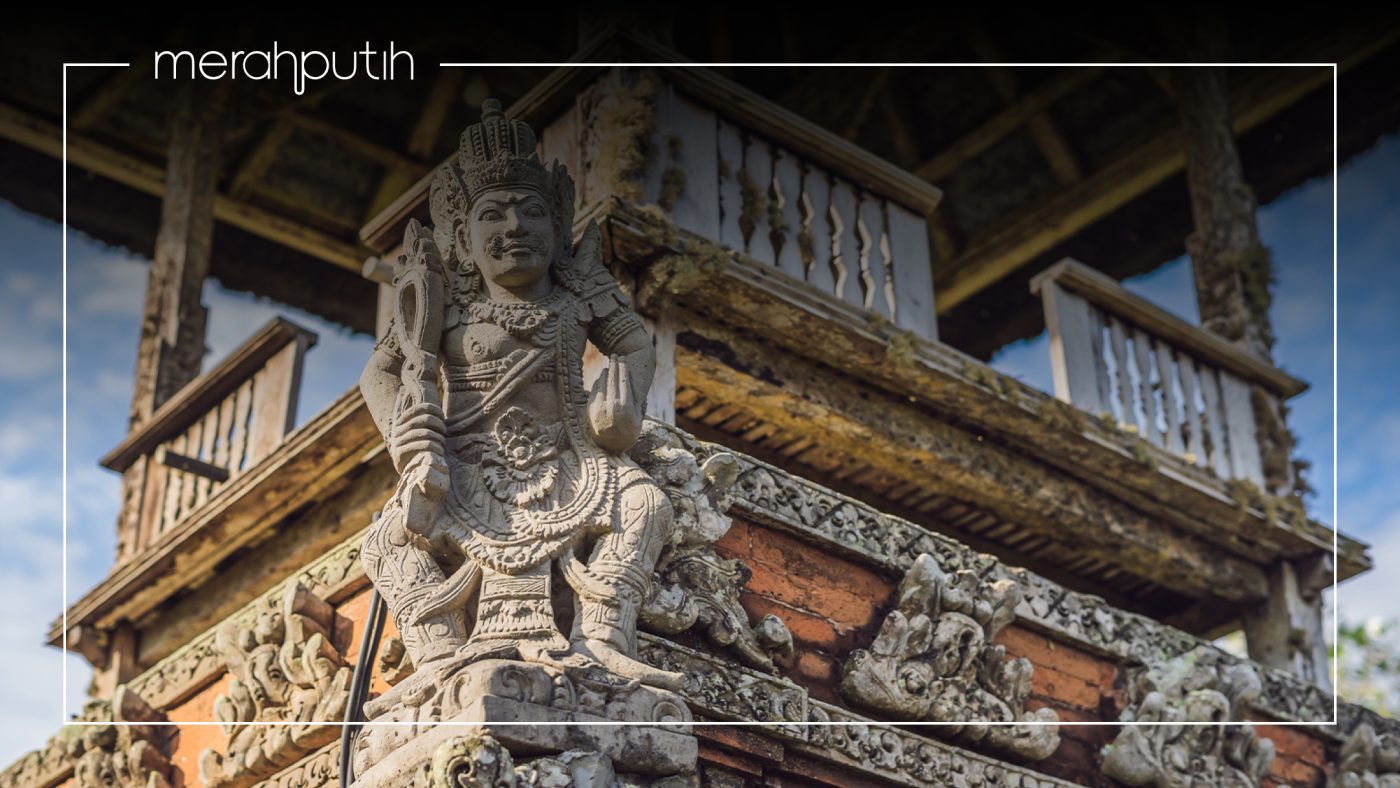
Balinese architecture is renowned for its intricate stone carving and ornamental richness. Every decorative element carries symbolic meaning. Door guardians protect entrances from malevolent spirits, floral motifs represent natural abundance, and mythological creatures convey specific spiritual concepts.
The candi bentar or split gateway that marks temple entrances symbolizes the division of the material and spiritual worlds, with visitors passing through to enter sacred space.
The kori agung (roofed gateway) with its ornately carved frame represents Mount Meru, the sacred mountain of Hindu cosmology.
Contemporary Interpretations of Balinese architecture
Modern Balinese architecture maintains traditional philosophical principles while incorporating contemporary materials and functions.
Luxury resorts and private villas revamp traditional forms using concrete, steel, and glass alongside teak, bamboo, and stone. The thatched roofs often cover swimming pools and spa pavilions rather than sleeping quarters, but the essential architecture remains recognisable.
This architectural evolution demonstrates the vitality of Balinese design principles. It’s flexible enough to accommodate modern life while preserving the philosophical foundations that make the tradition meaningful.
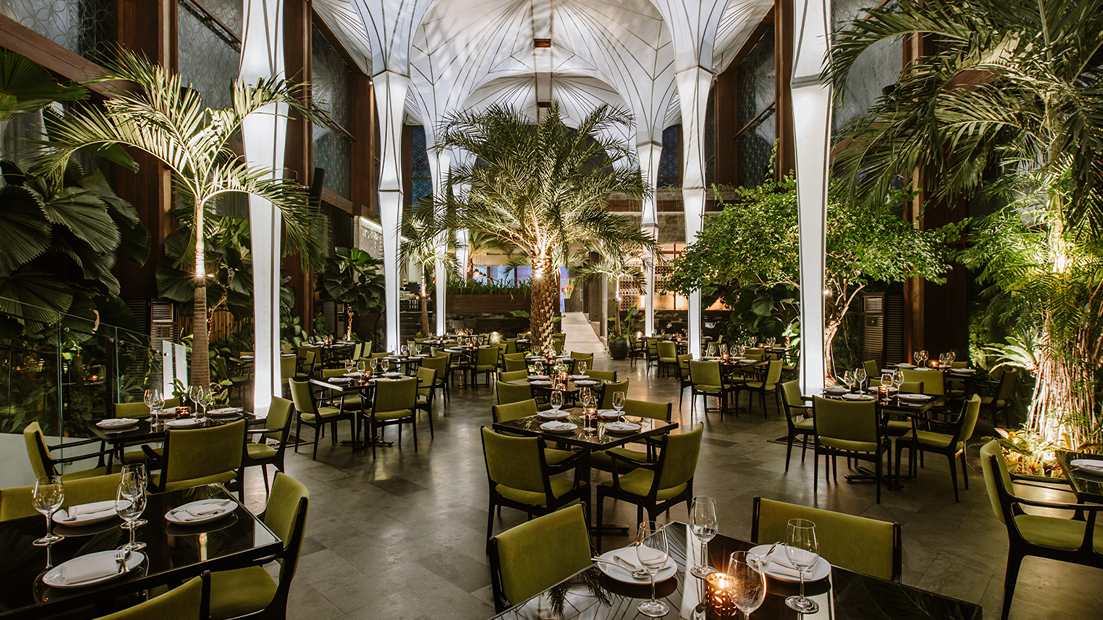
You can experience another dimension of the island’s aesthetic sophistication at Merah Putih restaurant in Seminyak. The restaurant’s stunning contemporary design draws inspiration from traditional Balinese architecture, featuring teak pods and an open plan space.
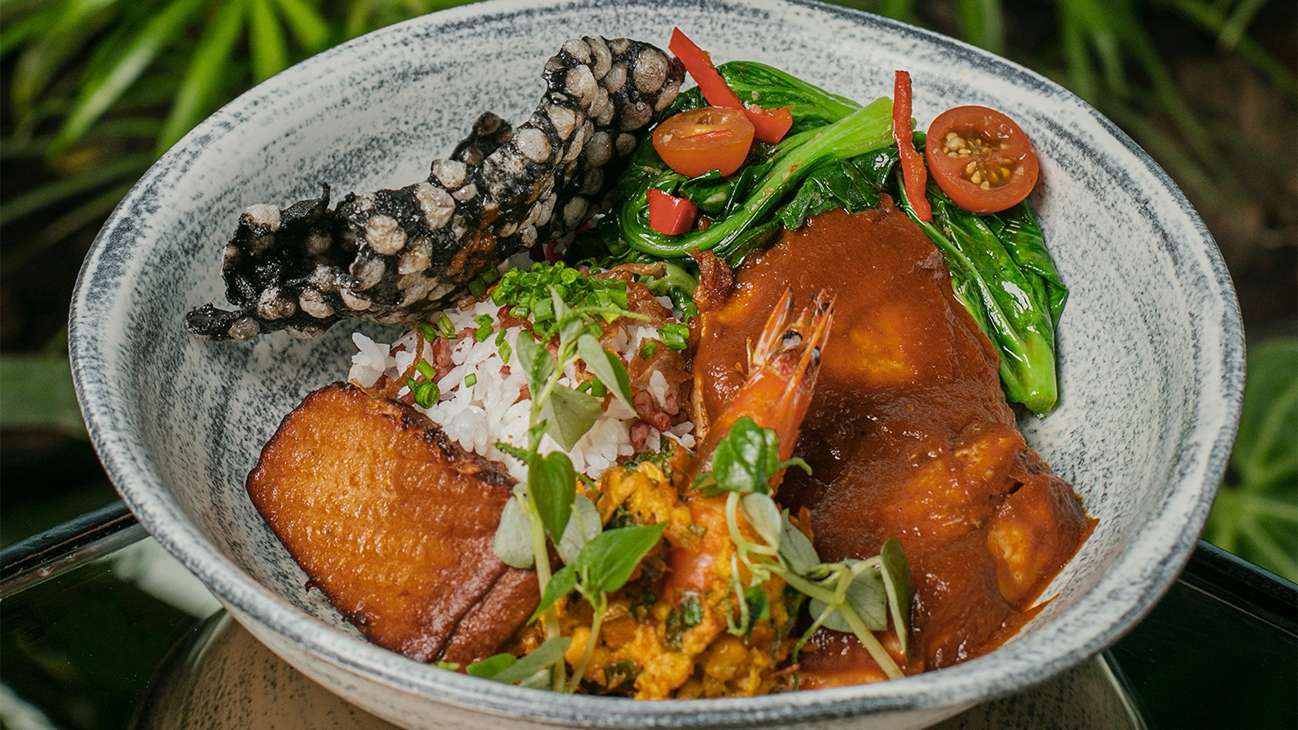
Just as Balinese architecture balances philosophy with beauty, Merah Putih harmonizes traditional Indonesian cuisine with contemporary.
Book your table with special gift vouchers today.